Relationship Therapy in Penarth, South Wales
Relationship Therapy with a Specialist Counselling Psychologist,
Dr Rachel Davies.

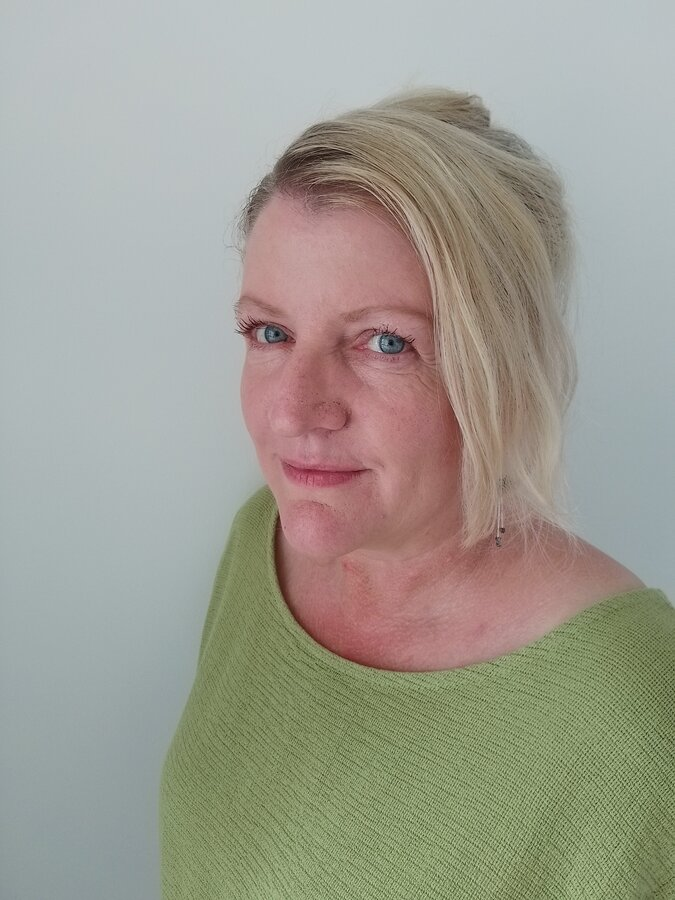
Welcome and thank you for visiting my website.
I am a qualified and experienced Counselling Psychologist, registered as a Practitioner Psychologist with the Health & Care Professions Council (HCPC) and a Chartered Counselling Psychologist with the British Psychological Society (BPS).
I have worked in the health / mental health field for 35 years as a clinician, researcher, educator and supervisor. I have 25 years of experience of delivering therapy and training and supervising others who do this life enhancing work. I worked as a senior clinical consultant at Relate for a number of years and taught on the Doctorate in Counselling Psychology at the University of South Wales.
In recent years I have focused on my specialism of relationship therapy in different settings. I offer these services to individuals or together with partner(s) and work with people who are motivated to embrace therapy to improve their relationships.
Alongside years of experience I have the following relevant qualifications:
- Professional Doctorate in Counselling Psychology
- Intermediate Training in Systemic Family Therapy (AFT)
- University Advanced Diploma (Couple Counselling) - Relate
- Post Graduate Certificate (Relationship Therapy) - Relate
- Certificate in Gestalt Couples Counselling
- BPS Approved Supervisor Training
- Diploma in Clinical Supervision
- Online Therapy Certificate
- PhD– Counselling & Organisational Psychology
I have a breadth and depth in my clinical career but now focus primarily on bringing psychological expertise to relationship therapy provision in South Wales. I have experience of a range of media work making contributions on relationship issues. Get in contact for more information.
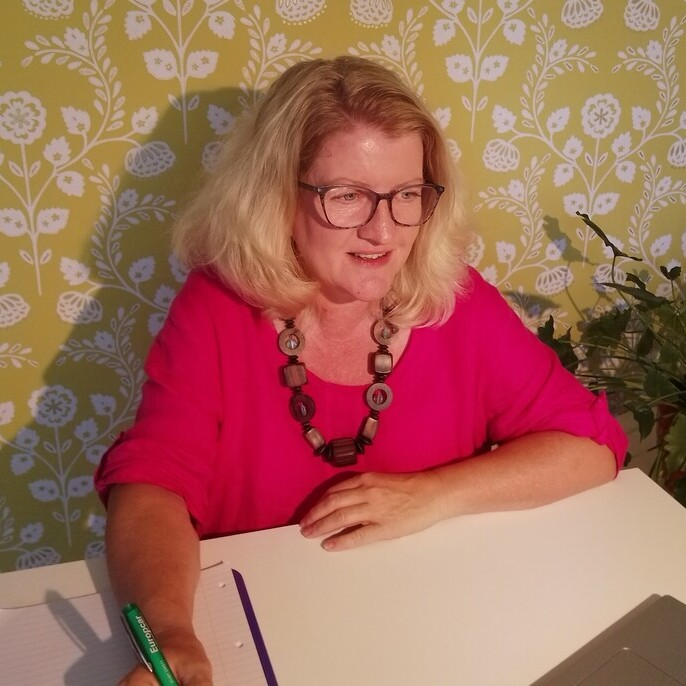

We have relationships because we want to join with another person, or persons and have a sense of “us”. But because “us” is made up of different people with different backgrounds, personalities and ideas the “us” can feel a struggle at times. The joy, desire, companionship and sense of “us” as the safe harbour in our lives can feel out of reach.
If “us” isn’t a safe harbour we may move on and try to create a new “us” with someone else, only to find ourselves again dissatisfied. As the famous quote says “wherever you go, there you are!"

When we are missing a safe harbour we may find ourselves putting our emotional energy elsewhere, commonly into children, work or even other partners. While this may have its benefits it can sometimes leave us feeling lonely or questioning “how did we get here.” When things feel painful we can then avoid them, e.g. we neglect those harbour walls. They may slowly get battered over time or come down dramatically in a storm. But either way they are not providing that safe harbour.
Working Together
We will work together to find shared understandings of the problems with your “us”, how each partner has contributed to some of the patterns that have become hard. We will explore what “us” used to be and what you would like it to be in the future. We will look at where there can be changes and where there will have to be acceptance, after all relationships are made up of individuals with differences. We will look at what “us” means to each of you and if we can redesign your own unique safe harbour together.
I will work hard to help you with your relationship but it is your relationship not mine. I have expertise as a relationship psychologist and you are the experts on yourselves and your “us”. So our work will be collaborative and relational where we all commit to improving your "us" and building that harbour. My style has been described as engaged, direct as well as encouraging.
Send me an email if you would like to begin that process with me.
What issues can relationship therapy help with?
There are many reasons why people are not where they want to be in their relationships. If you want to talk about this it is worth coming to see me. Everyone is different but the common issues people bring are:
- Difficulty in communicating your wants and needs to each other
- A sense of not being heard or understood
- A loss of connection and a desire to reconnect
- Trust, jealousy or unhappiness re how your partner is with other people
- Boundaries of your relationship and relationships with others
- Arguing in a way that leaves you depleted with nothing resolved
- Relationship is at a new life stage (e.g. moving in, becoming parents, kids leaving home, retirement)
- The impact of life stressors on your relationship (e.g. work, physical health, mental health*, house moves, elderly parents, co-parenting)
- Your intimacy, affection or sexual connection* is not all you want it to be
* Please note I do not offer psycho-sexual therapy or general mental health therapy. If required I will discuss referral to known associates who may be better placed to help.
My Services
Relationship Psychology provides specialist relationship therapy services:

Relationship Therapy
- For two people in a relationship (sometimes called 'couple counselling')
- For throuples or others who are ethically non-monogomous
- Individual relationship therapy for people who want to understand themselves in their relationships better (past or present)
Relationship therapy is open to all sexualities and relationship types and I have a particular interest in working with people who identify as LGBTQ+. I also have expertise in working with the impact of physical health conditions, disabilities on intimate relationships.
All services are available to UK residents on zoom (more flexibly) or face to face in South Wales (limited availability). If I do not have availability to see you at the moment I often operate a short waiting list or may be able to provide details of other therapists who could see you more quickly. I offer counselling services in English.
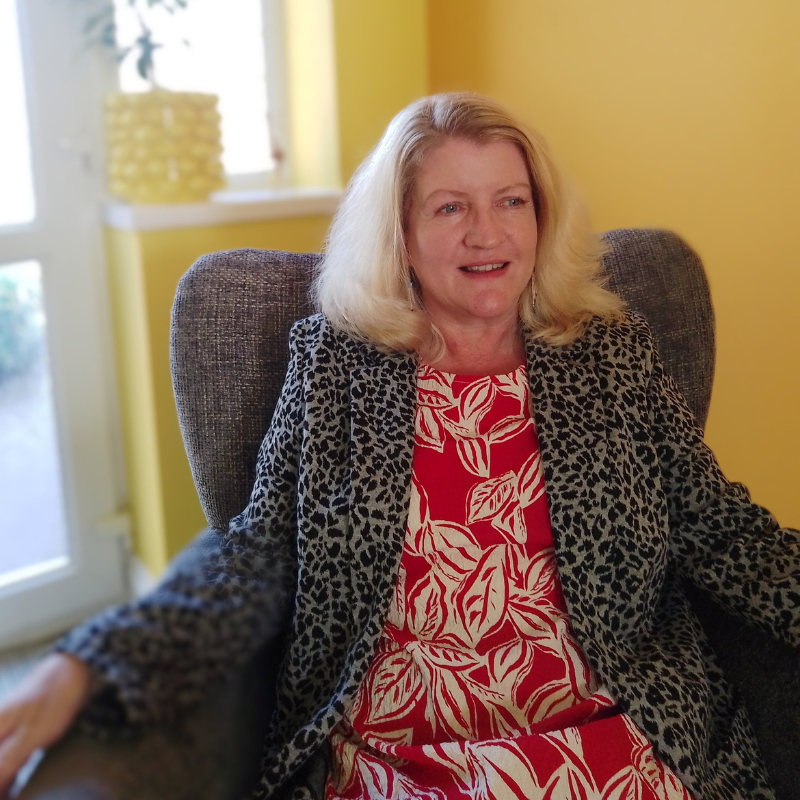
Clinical Supervision
(For relationship therapists /psychologists)
I have many years experience supervising relationship therapists who work with more than one person. I can provide all your clinical supervision needs in this area or alternatively contact me if you are interested in engaging me for supervision of the relationship therapy component of your broader practice.
Please get in touch to enquire about my supervision services.
My location
I offer online relationship therapy sessions via Zoom, allowing me to reach clients across Wales and the UK. In person sessions are also available in Penarth, South Wales. My practice is easily accessible from the surrounding areas of Barry, Cowbridge, Cardiff, Llantwit Major, Bridgend, Vale of Glamorgan and greater South Wales.
Sessions and Fees
Sessions for individuals last for 50 minutes.
Sessions for more than one person last for 60 minutes.
My fees are as follows:
Online
Relationship therapy for individuals £80
Relationship therapy for couples /multiples £85
I have limited day time and online concessionary spaces
for people on low income (let me know if you are enquiring about these)
In person
All in-person sessions are £95 to account
for room hire.
The initial assessment comprises of joint time (50 minutes) and individual time (30 minutes per person) and the full charge is £100.
PLEASE NOTE AS OF DECEMBER 2025 NEW ASSESSMENT SESSIONS WILL BEGIN IN JANUARY BUT YOU ARE WELCOME TO CONTACT ME BEFORE THEN TO BOOK ONE. I WILL BE TAKING LEAVE FROM 19TH DECEMBER.
Get in touch
What happens next if you want to work with me:
- Fill out the contact form indicating if you are looking for relationship therapy as an individual or with partner(s). There is space to ask any questions you may have about my services.
- I will email you asking for some more details of you, your relationships and what you are looking for including about your availability and online versus face to face preference.
- I will aim to respond to you within 10 days of receiving your paperwork and will then offer you some assessment meetings.
- If you’re coming with partner(s) I will meet with you together and separately as an assessment of whether relationship therapy can be helpful for you. This usually takes place over a couple of meetings.
- All of us need to decide we are a “good fit” in order to start working together. Even though the first couple of meeting are assessment rather than therapy clients often report they still feel therapeutic as you are starting to talk about your relationship.
- The assessment will also give you a sense of what it is like to be in relationship therapy and to work with me.
- If we are all in agreement we will book some ongoing relationship therapy sessions.
I understand that even reaching out to me may feel like a big step but my clients are glad that they made contact with me.
Some frequently asked questions
The main difference is that your relationship is the client rather than you as an individual. This may feel different compared to when your therapist is fully there for you or ‘on your side’. Of course I will care about you and your experience and want to build a connection with you as people, but my primary focus is on your relationship.
Other differences will depend on the type of therapy you have experienced in the past. For example if you have had person centred therapy where the therapist is more quiet and you dictate the flow you may notice that my style is quite different! I work with you as an active participant and so will ask questions, make observations and suggest you try out different things. In contrast you may have experienced a very structured therapy like cognitive behavioural therapy where there would be a set way of working with regular homework tasks. Again my way of working is different to this as we collaborate together on the way that we work, focus of each session, etc.
The first two assessment meetings will be in successive weeks but after that there is some flexibility depending on what you want to achieve. Some people come weekly and some come fortnightly depending on what they want to achieve and other commitments. Working online gives most people flexibility to fit a session into their week. Whatever we agree it is important that you spend some time together in between our sessions. If the only time you see each other alone is when you are with me then relationship therapy is less likely to be effective.
I find that the rhythm of a few sessions – review – few sessions works well. This means that approximately every 6 sessions we discuss how things are and whether it is useful to continue. There are several benefits to this way of working:
- That we are regularly checking in together and making adjustments as we go
- We are acknowledging that relationship therapy is not a ‘quick fix’ that can bring lasting change in one or two hours so people can draw a breath knowing there is a commitment that we are going to meet for at least a couple of months.
- Finally you are making a commitment to your partner(s) that at least for the duration of our meetings that you are leaning in to each other and prepared to work at the issues that brought you to therapy.
Working online can be useful if one of you works away or you are based in different locations (but please note you must be in the UK in order for our session to take place). Both ways of working can be effective and there is an element of choice for you and also in some cases my professional judgment. If I feel it would be better to see online clients in person I will suggest this and if you are able to manage to see me in South Wales we will do this as either a one off or ongoing.
Relationship therapy requires people to feel safe enough to work together and with me in a trusting therapeutic relationship. If there are issues of abuse or control within your relationship it would not be safe or productive for you to have therapy together. There are organisations that are more suitable where you can get help and advice and I suggest you look at these. You matter and your safety and happiness needs to be your priority.
I do not offer crises support nor offer an out of hours (between sessions) service. There are agencies that do:
- CALL mental health helpline in Wales (24 hours a day) 0800 132 737 they also have a list of agencies that can help with specific issues Find an agency - Call Helpline
- The Samaritans operate a 24-hour emergency service via 08457 90 90 90 - Website: www.samaritans.org
- If you are in crises and/or at risk of harm you can also contact an Accident and Emergency department
- National Domestic Abuse Helpline - 0808 2000 247 - free, confidential support for anyone experiencing domestic abuse